

How to Tie a Tie: A Gentleman’s Guide to Classic Tie Knots
Mastering the Art of the Tie Knot
A well-tied tie is one of the most recognisable finishing touches in men’s style. Whether worn for business, weddings, formal events or everyday tailoring, the right knot can bring balance, structure and character to an outfit.
From the simplicity of the Four-in-Hand to the symmetry of the Windsor, each tie knot offers a distinct look. The best choice depends on your collar shape, tie fabric, occasion and personal style.
If you are exploring neckwear more broadly, you may also find our guide to tying a cravat a useful reference.
Which Tie Knot Should You Choose?
Four-in-Hand
Best for everyday wear, narrower collars and relaxed tailoring. Slightly asymmetric and understated.
Half Windsor
Balanced and versatile. Suitable for business meetings, weddings and most formal occasions.
Full Windsor
Fuller and more structured. Best with spread collars and occasions that call for a confident, formal appearance.
The Four-in-Hand Knot
The Four-in-Hand knot is one of the most practical and widely used tie knots. It is slim, slightly asymmetric and easy to tie, making it ideal for everyday business dressing and relaxed formalwear.
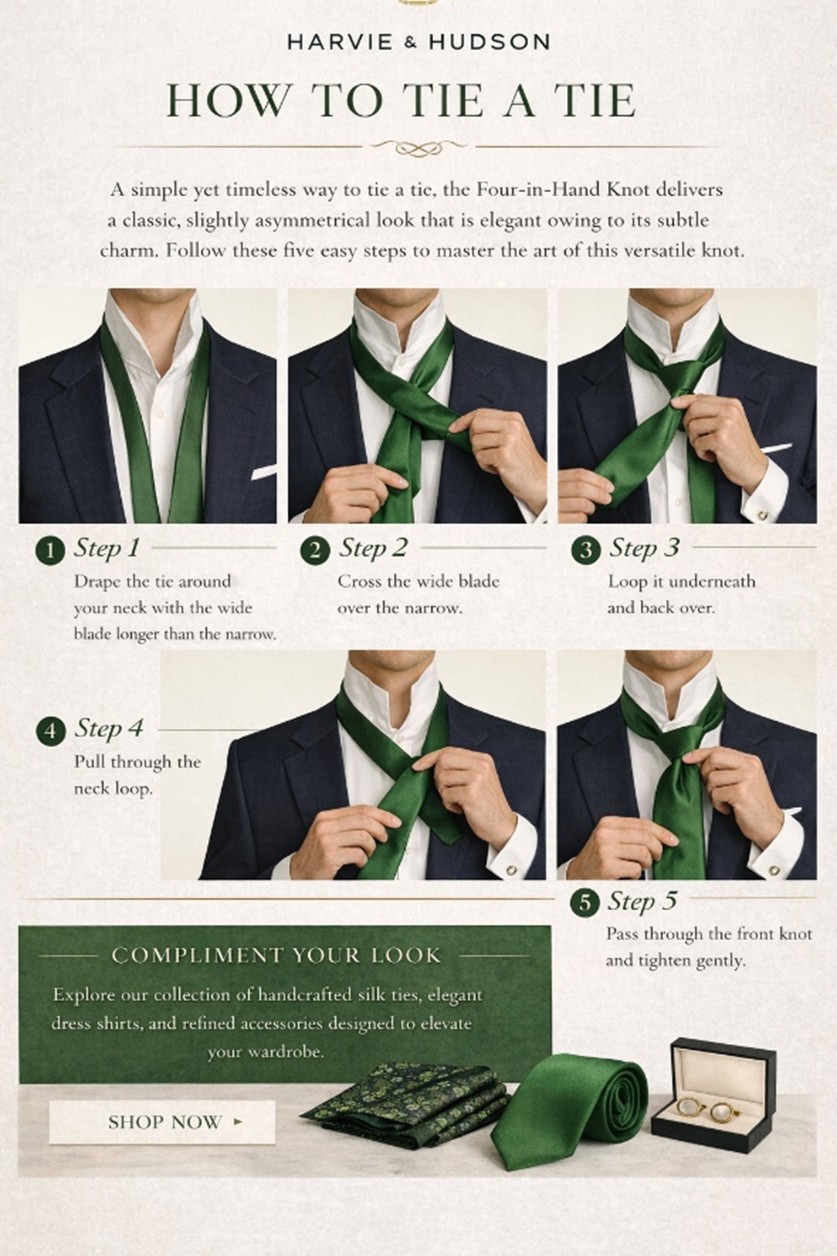
How to Tie a Four-in-Hand Knot
Drape the tie around your neck with the wide blade longer than the narrow blade. Cross the wide blade over the narrow blade, loop it underneath and back over the front. Pull the wide blade up through the neck loop, pass it down through the front knot and tighten gently.
Why choose it? The Four-in-Hand is understated and slightly asymmetric, making it ideal for everyday wear. It works particularly well with narrower collars and relaxed tailoring.
The Half Windsor Knot
The Half Windsor is a balanced and versatile knot that offers more symmetry than the Four-in-Hand without the fullness of the Full Windsor. It is a strong choice for business, weddings and formal occasions.
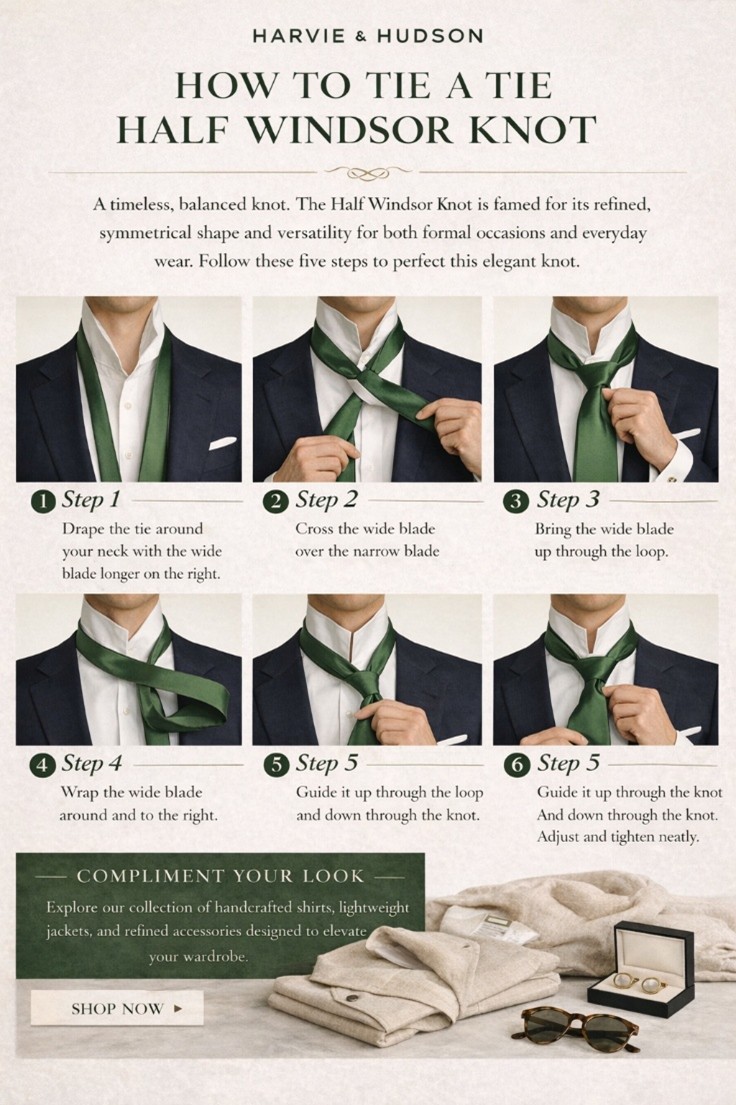
How to Tie a Half Windsor Knot
Start with the wide blade longer than the narrow blade. Cross the wide blade over the narrow blade and bring it up through the neck loop. Wrap it behind and across the front, then bring it up again and pull it down through the knot before adjusting.
Why choose it? The Half Windsor is balanced and symmetrical, suited to most occasions. It is particularly effective for business settings and formal events without appearing overly structured.
The Full Windsor Knot
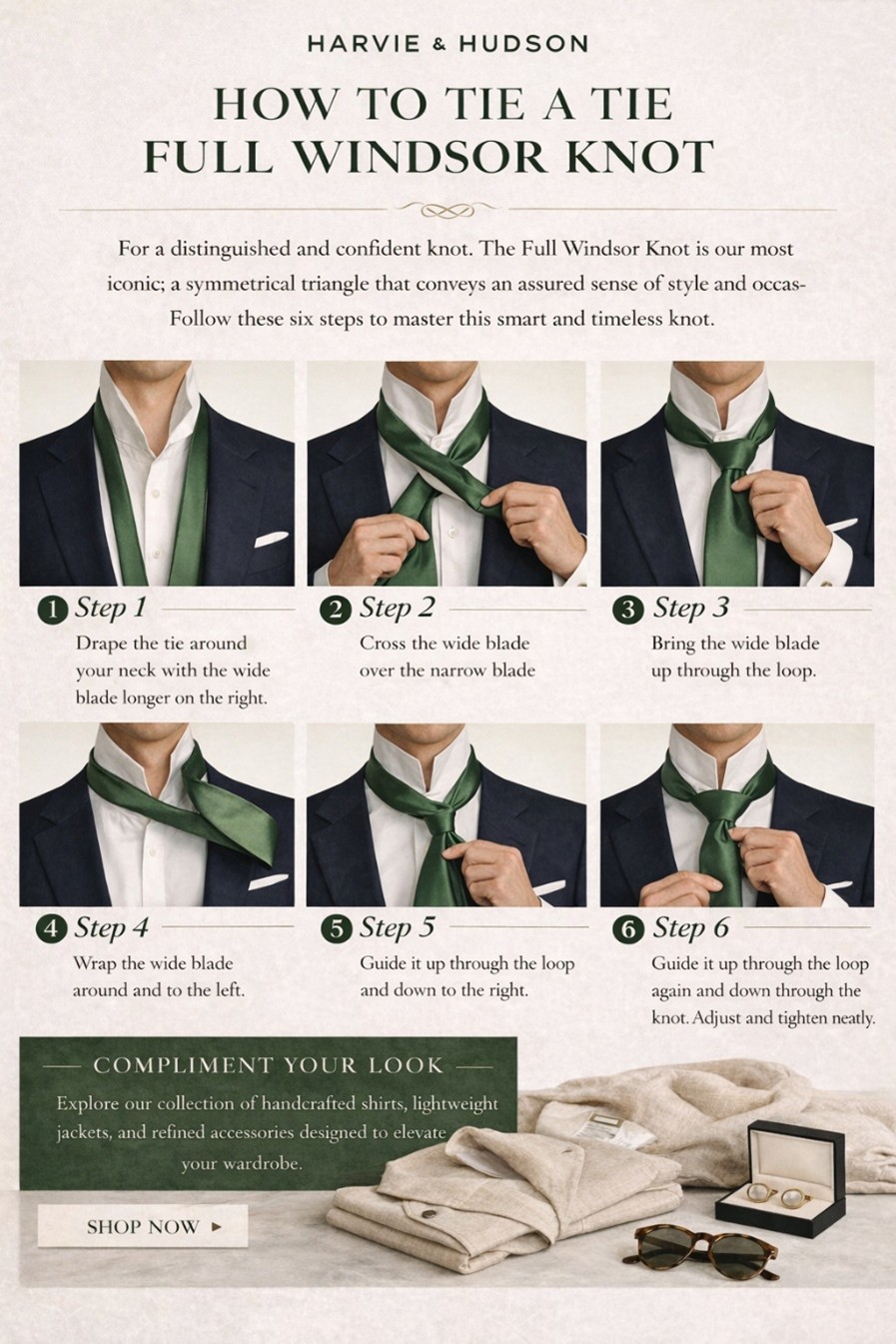
The Full Windsor is a fuller, more formal knot with strong symmetry. It creates a confident shape and is best suited to spread collars, formal occasions and structured tailoring.
How to Tie a Full Windsor Knot
Position the wide blade longer than the narrow blade. Cross it over and pull it up through the neck loop. Wrap it to the opposite side and repeat, then bring it across the front. Pull it through the knot and tighten evenly to form a full, symmetrical finish.
Why choose it? The Full Windsor is ideal for spread collars and occasions that call for a refined, structured appearance.
Refined Styling Notes
Once the knot is tied, small details make a significant difference. The tip of your tie should rest just at the belt line. A slight dimple beneath the knot adds depth and character, while the knot itself should complement the spread of your collar.
Silk ties offer a clean and elegant finish suited to both business and formalwear. For a complete outfit, pair your tie with a crisp business shirt, a tailored suit, and a refined handkerchief.
Matching Tie Knots with Shirt Collars
The right knot should complement the collar shape. A smaller knot often works best with narrower collars, while fuller knots are better suited to wider spread collars.
Narrower Collars
Choose the Four-in-Hand for a neat, understated finish.
Standard Collars
The Half Windsor offers balance and works well across business and formal shirts.
Spread Collars
The Full Windsor fills the collar space and creates a strong, symmetrical appearance.
Related guide: For shirt fit and collar advice, read our definitive guide to shirt sizing and measuring.
Complete the Look
A tie is most effective when it works with the rest of the outfit. A crisp shirt provides the foundation, while cufflinks, handkerchiefs and formal accessories add polish and personality.
FAQs: How to Tie a Tie
What is the easiest tie knot to learn?
The Four-in-Hand is usually the easiest tie knot to learn. It is simple, practical and suitable for everyday wear.
What tie knot is best for business?
The Half Windsor is a strong choice for business because it is balanced, neat and suitable for most shirt collars.
When should I wear a Full Windsor knot?
The Full Windsor is best for formal occasions, spread collars and outfits that require a more structured appearance.
Where should the tip of a tie sit?
The tip of the tie should usually sit at the belt line for a balanced and refined appearance.
Should a tie have a dimple?
A slight dimple beneath the knot adds depth and character, especially when wearing silk ties.
Further Reading
Explore Ties and Formal Accessories
Discover silk ties, handkerchiefs, cufflinks and formal accessories to complete your wardrobe with confidence.
Shop Ties